

How to Evaluate Your GRC Strategy at Halfway Mark
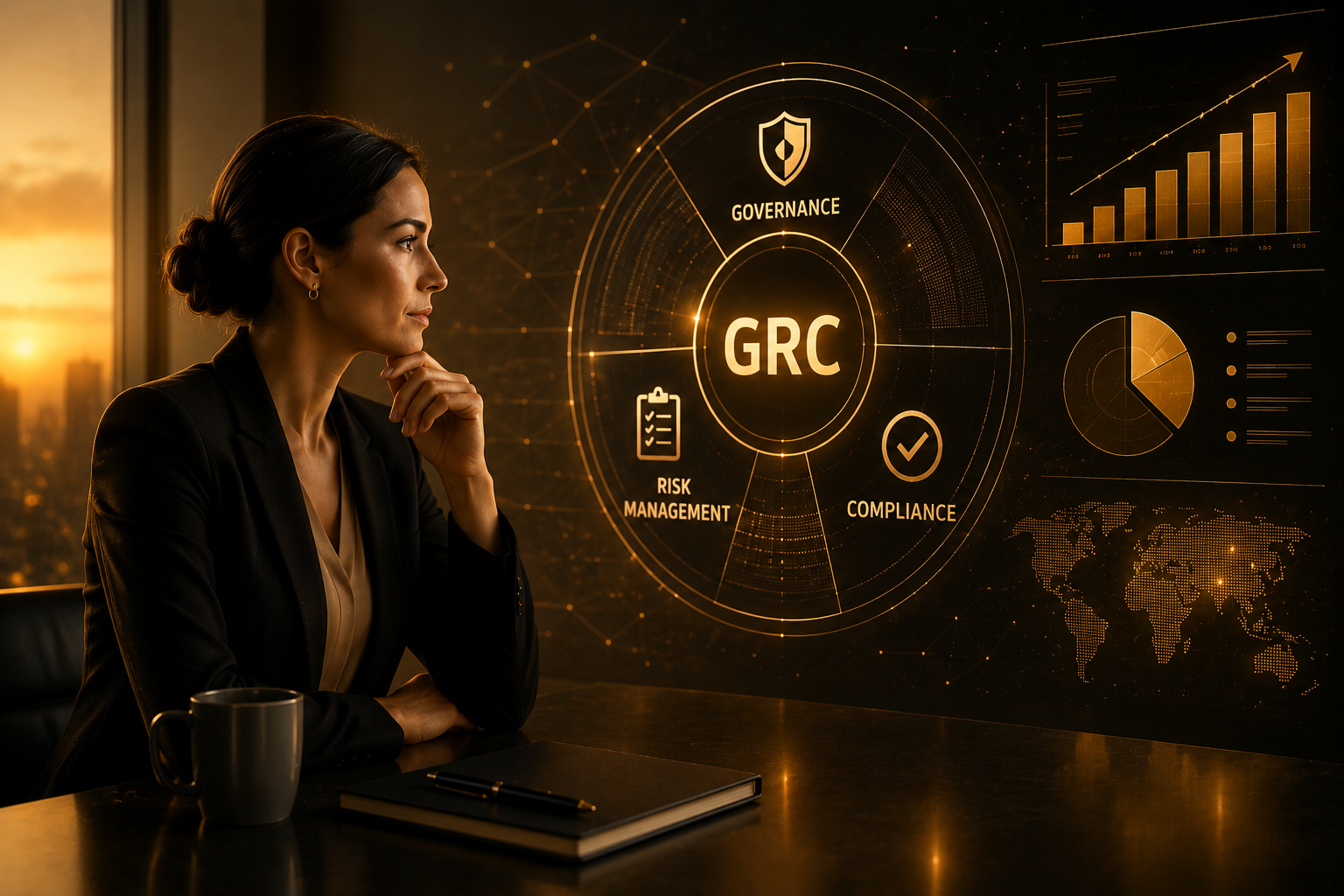
New challenges are emerging at a very high frequency given the fast-changing business environment; the only thing that can help your organization navigate through the storm is a good GRC program. While GRC frameworks provide a protective shield in the new world of shifting compliance requirements, emerging threats, and heightened expectations of investors and other stakeholders, a robust GRC framework is a way to build resilience and power.
It is always a good time to pause and reflect, especially during the middle of the year, regarding your GRC strategy. As we approach the mid-year, there is a chance to identify flaws, reassess priorities, and tailor for the legal environment. As a checkpoint, it also becomes your opportunity to build on processes, minimize risk, and enforce compliance. This will position your organization effectively to govern and deliver operational excellence.
What is the Significance of Mid-Year GRC Evaluation?
The business landscape is volatile and continues evolving daily, with organizations facing risks and regulations in unknown territory. Technological advancements, geopolitical disruptions, and other challenges demand adaptation — often under time pressure — lest companies get left behind on their road to remaining competitive and compliant.
GRC strategy is not static and must evolve to fit changing situation requirements. Mid-year is a critical juncture for performing a full GRC review. At this point, companies have enough data to evaluate their strategies and make tactical pivots proactively to cover gaps or seize opportunities before year-end.
Businesses use midyear evaluations to identify developing risks, update compliance frameworks, and comply with the new regulatory requirements. For example, trends show that organizations reviewing their GRC are 30 percent more likely to be compliant with little disruption, according to Charles Financial Strategies. Moreover, midyear assessments by companies are proven to improve operational efficiency and lower compliance costs by up to 25%. Not revisiting your GRC framework can cause you to miss risks that can have catastrophic long-term and even expensive penalties for non-compliance. Proactively, organizations can design resilience, enhance stakeholder confidence, and set the groundwork to deliver their annual objectives in an agile and accurate way. If there ever was an excuse not to do a mid-year review, throw that out the window—it's essential.
Key Areas to Evaluate GRC Strategy
An ideal halfway-year evaluation of your GRC focuses on three critical areas essential to keeping your organization able to adapt, withstand shocks, and thrive.
Governance
The approach that underlies the strategy of GRC is governance. It is advisable to make this review in the middle of the year regarding leadership involvement in decisions and the level of leadership in decision-making. The organization's governance is said to be contingent on leaders who advocate for openness and ensure that measures support the organization's goals, based on Charles Financial Strategies.
Risk Management
Another foundation of GRC can be identified as risk management. During a mid-year review, you should conduct a detailed review of your risk assessments to see how your plans for mitigating risks are operating and how the entire organization is coping with new risks. It means specific risks, such as engineering weariness or an administrative shift, don't blind your corporation.
Compliance
Your compliance evaluations should center on bringing your operations to the current regulations and industry standards. This can include such aspects as checking the audit readiness and exposing the gaps in processes, which may result in fines or failure of negative publicity. According to Charles Financial Strategies, organizations that proactively monitor compliance will reduce regulatory risk by 20%. Thoroughly looking at all three areas puts your organization in a place to confront challenges with authority and accuracy.
Steps to Take Mid-Year GRC Review
A mid-year GRC review must be structured and strategically driven to produce actionable insights. Here's how to ensure your evaluation drives meaningful improvements:
Set Measurable Goals
The first step is to set out clear objectives for the review. What does success look like for your organization? Setting measurable goals, whatever they may be, to improve compliance rates, strengthen the risk mitigation or standardize governance process, help achieve your desired results, and keep the evaluation oriented towards the broader organization mission.
Engage cross Functional Team.
Collaboration is key. It involves getting stakeholders from other departments to come together and understand how GRC practices are performing in your organization. According to Charles Financial Strategies, risk and compliance strategies must align with real-world operational needs and as such, cross-departmental input is key to uncover hidden gaps.
Leverage Technology
In the case of Modern GRC tools, all the difference they can make. Dashboards and automated reports streamline data collection, track real-time metrics, and avoid clumsy human error. Using these tools, you'll improve efficiency and gain in-depth insight into your organization's GRC posture.
Conduct a Gap Analysis
Do a gap analysis in detail to identify areas where you can improve. Identify deficiencies by comparing your current practices against regulatory requirements or industry benchmarks. As Charles Financial Strategies noted, to ensure and preserve thorough compliance and further strengthen your organization's risk management framework. If you follow these steps, your mid-year review will reveal transparent opportunities to fine-tune your GRC strategy to keep your organization aligned, compliant, resilient, and equipped to deal with whatever is around the corner.
An Inspection of Tools and Frameworks for Effective Evaluation
To be successful with a midyear GRC evaluation, you need to use the right tools and frameworks to streamline processes and get actionable insights. Luckily, many organizations have several options to manage metrics, monitor risks, and stay compliant efficiently.
GRC Software Solutions
Popular tools include RSA Archer, MetricStream, and ServiceNow, allowing users to centralize their GRC function, automate workflows, and provide real-time analytics. These platforms make GRC activities less cumbersome by decreasing the amount of work needed and enhancing the quality of actions.
International Standards.
In addition to software, Structured frameworks provide a solid foundation for assessing and enhancing GRC strategies:
COSO (Committee of Sponsoring Organizations): This is about integrating governance, risk management, and control with the goals of an organization.
ISO 31000 (Risk Management): It provides valuable recommendations that help structure the risk assessment and management process.
NIST (National Institute of Standards and Technology): Cybersecurity risks in the digital-first environment are managed through a trusted framework, and a critical tool in this regard is.
The Role of Automation
It goes a step higher when the GRC process is automated. Following-generation software decreases the likelihood of mistakes made by humans, reduces the amount of paperwork, and provides standardization of reporting. What Charles Financial Strategies means by saying that automation with the use of proven frameworks helps simplify evaluations is that it also helps build resiliency in organizations to quickly respond to changing risks and compliance needs of the business.
Aligning GRC Strategies to Organizational Goals
To derive value from your Governance, Risk, and Compliance (GRC) strategy, it has to align with your organization's business direction. It is beneficial for the organization, for public safety, and for the protection of your employees and customers to have a well-aligned GRC framework, but having it well-aligned is not only risk management and compliance, but it is also a driving force in strategic initiatives and in that way can help your organization to remain competitive. It is essential to understand how GRC activities map into organizational objectives, such as enhancing operations, managing compliance, or increasing stakeholder trust. Charles Financial Strategies has noted that when your GRC strategies align with your organizational goals, your efforts are far more meaningful.
Cross Team Collaboration
Risk management and compliance cannot be solved in isolation; they are interdependent. To design an integrated framework for GRC, there is a need to involve all departments of the organization. For instance, the finance, IT, and legal departments face cybersecurity threats while at the same time trying to meet compliance requirements in finance and legal departments. Charles Financial Strategies cites fostering a culture of shared responsibility helps your organization understand at a holistic level vulnerabilities and opportunities.
Effective GRC Communication
One key to sustaining alignment is to keep the stakeholders informed. Regularly contribute updates on GRC initiatives to show their importance and progress using concise reports or presentations. It gives stakeholders confidence and ensures continued support for your efforts. Aligning your GRC strategy with your organization's goals, working collaboratively, and prioritizing communication will help your organization become compliant and competitive.
Build An Action Plan After Evaluation
The effectiveness of a mid-year GRC evaluation is only driven by the action plan it inspires. It is key to make those insights actionable and turn them into concrete steps to increase governance, risk, and compliance (GRC) performance.
Prioritize High-Impact Areas
First, focus on where you think you could make the most significant impact based on the gaps and opportunities you identified in your evaluation. Identify the specific actions required for each priority, who is responsible and how much time you need to complete these tasks. However, following through on insights to produce tangible outcomes requires a well-defined action plan, as Charles Financial Strategies points out.
Roadmap for the Rest of the Year
Create a comprehensive roadmap of your GRC priorities against other business goals. Break initiatives into bite-sized chunks and put point markers on everyone's path of progress. Undertaking this step allows you to keep your GRC efforts focused and on the right track towards achieving significant results. Moreover, a clear roadmap helps mobilize the stakeholders and keeps them supporting the case.
Progress Tracking & Adaptability
Key performance indicator (KPI) tracking should be set up in a system so risk level can be monitored and compliance with updated regulations can be checked to ensure continuous progression. Use technology to easily track updates, automate them, and gain real-time insight. Charles Financial Strategies points out that adaptability is key in today's weather of constant change. Review your action plan regularly to continue leading the pack in the face of new risks and continually changing compliance requirements.
Conversion of evaluation findings into an actionable, clear plan and embracing adaptability will help strengthen your governance framework and help mitigate risk while simultaneously keeping your business compliant with confidence.
A mid-year GRC evaluation is critical to maintaining effective and aligned governance, risk, and compliance strategies against a changing environment of challenges. Proactively identifying gaps, refining processes, adapting to new risks, helping businesses avoid potential threats, strengthening compliance, and cultivating long-term resilience. Don't wait: seize this opportunity to build a solid GRC framework and put your organization on the way to consistent success. For insights, tools, and support, visit Charles Financial Strategies for the expert insights, tools, and support that will enable you to move your efforts forward.